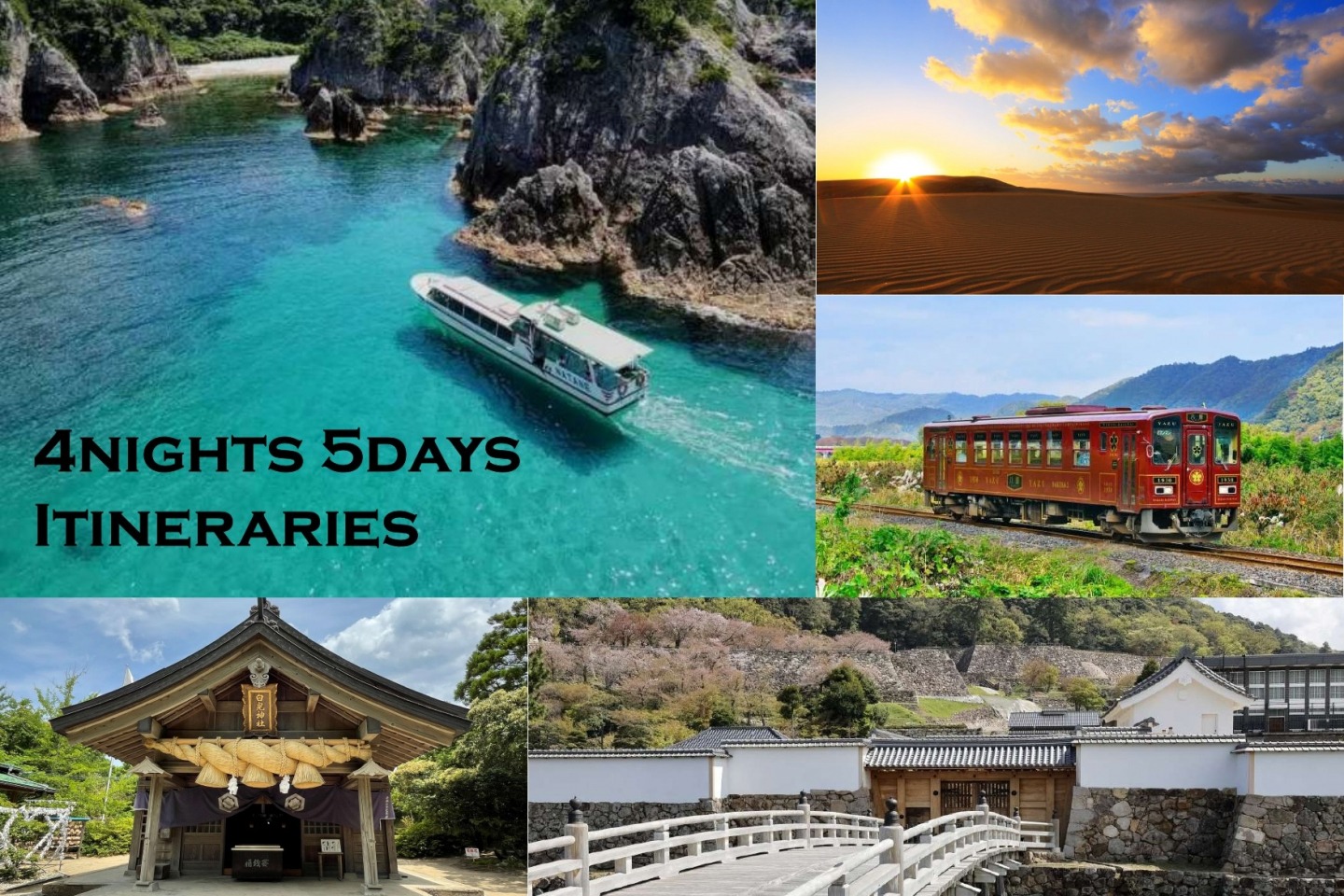
Tottori at Its Best: A 4‑Night, 5‑Day Adventure
A Perfect Plan to Enjoy Both Sea and Mountains!
Let’s make the most of your trip to Tottori♪
Day 1
Travel to Tottori Station by public transportation
※ Fixed‑rate direct taxi between Tottori – Airport / Kinosaki Reserve
Stay at a hotel around Tottori Station
Day 2
◎ Uradome Coast – Island Cruise Reserve
◎ Tottori Sand Dunes – The Sand Museum Reserve
Lunch
◎ Sakyu Lift
〇 Walk around the Tottori Sand Dunes
Stay at a hotel around Tottori Station
Day 3
◎ Local Train Trip on the Wakasa Railway Reserve
〇 Wakasa Station Tour & Wakasa‑juku Stroll
※ Local departure tour Reserve
Lunch
Stay at a hotel around Tottori Station
Day 4
〇 Hakuto Coast / Hakuto Hill
※ Local departure tour Reserve
Lunch
〇 Roadside Station Shinhwa-no-Sato Hakuto
〇 Tottori Castle Ruins / Kyusho Park
〇 Tottori Toshogu Shrine (Former Ochidani Shrine)
Dinner – Takumi Kappo Restaurant
Stay at a hotel around Tottori Station
Day 5
◎ Tottori Mingei Museum
Travel to the airport or your next destination by public transportation
※ Fixed‑rate direct taxi between Tottori – Airport / Kinosaki Reserve
- Travel time
- 4 nights 5 days
- Transportation
- Public transportation
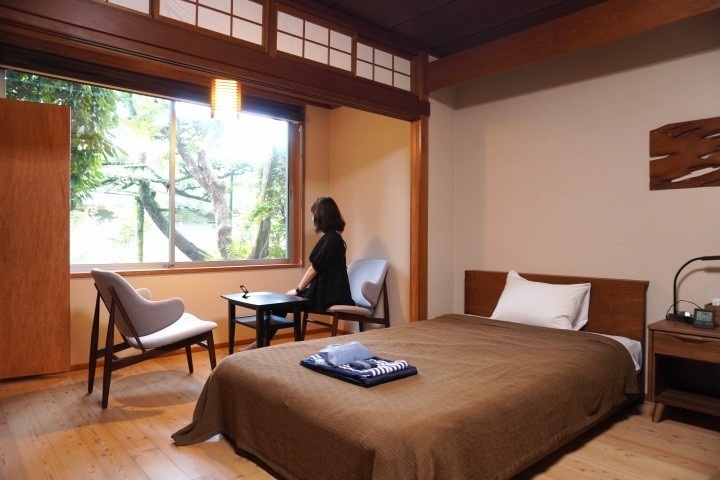
Stay at a hotel around Tottori Station
Hotels around Tottori Station are convenient for sightseeing using public transportation such as JR trains and local buses. Relax and recharge at your base hotel, and enjoy your trip to the fullest.
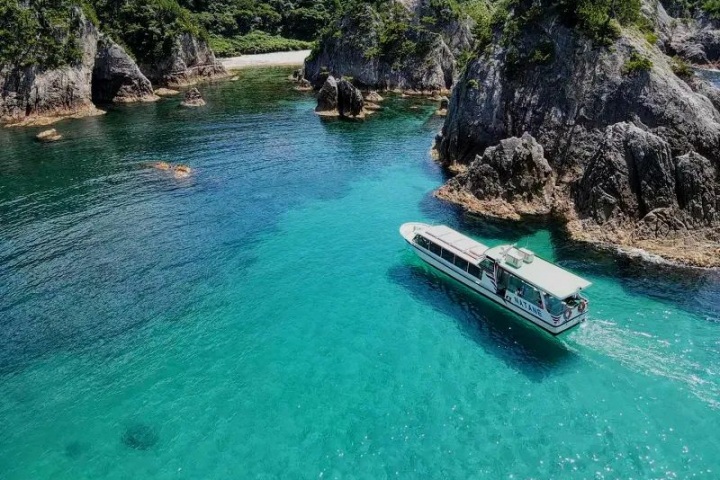
Uradome Coast Island Boat Tour
Experience an exciting cruise with spectacular views and adventures on the Sea of Japan!
Uradome Coast is a popular tourist area in Iwami Town. Over the years, it has been shaped into rock arches, caves, and numerous islands of various sizes, around which the vast expanse of a deep, clear marine-blue sea spreads out.
On an island boat tour, you can enjoy the breathtaking natural beauty of this area from the sea. On large cruise ships, you can get up close to sheer cliffs and caves for an up-close experience of the majestic and dynamic scenery of the Sea of Japan.
There are several types of pleasure boats available, including the “Uradome Coast Island Small Boat Uradome,” which is able to navigate narrow channels inaccessible to larger ships to explore oddly-shaped rocks and shallow coves, as well as private chartered cruisers.
View basic information
- Address (Japanese)
- 岩美郡岩美町大谷2182
- Telephone Number
- 0857-73-1212
- Opening Times
- 8:30-16:30
*Please check the official website for the departure times of each boat.
- Closed
- Operations are dependent on weather conditions.
Closed during winter (December - end-February)
*Please check the official website for details.
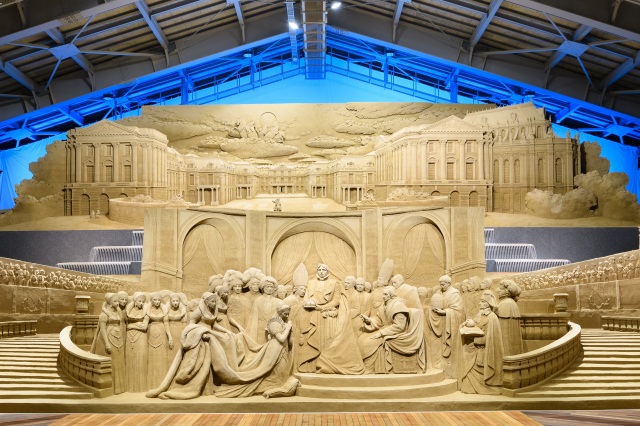
The Sand Museum, Tottori Sand Dunes
A museum exhibiting sculptures made of sand
From January 5 to April 23, 2026, the museum will be closed for the next sand sculpture production and facility maintenance.
★ Next, from Friday, April 24, the 17th exhibition "Traveling the World with Sand: Spain" will be held! Look forward to it!
The Sand Museum is the world's first museum that exclusively displays sand sculptures made solely with sand and water. Exhibits take on different themes every year, based on the concept “Travel Around the World in Sand.” The museum is produced by Chaen Katsuhiko, a sand sculpture artist active both in Japan and abroad, and the works on display are created by some of the world's top sculptors. There are also large-scale sand sculptures over 20m wide, and the exhibition space where they are displayed is truly spectacular.
After the exhibition ends, the sculptures are returned to their original state as sand, so they can be described as art that can only be experienced once in a lifetime. Enjoy this unique world of sand sculptures.
View basic information
- Address (Japanese)
- 鳥取市福部町湯山2083-17
- Telephone Number
- 0857-20-2231
- Opening Times
- 9:00 a.m. - 6:00 p.m. (last admission at 5:30 p.m.)
- Closed
- Open every day during event periods
【Lunch】Sakyu Center Miharashi no Oka
A convenient tourist hub offering a panoramic view of the Tottori Sand Dunes
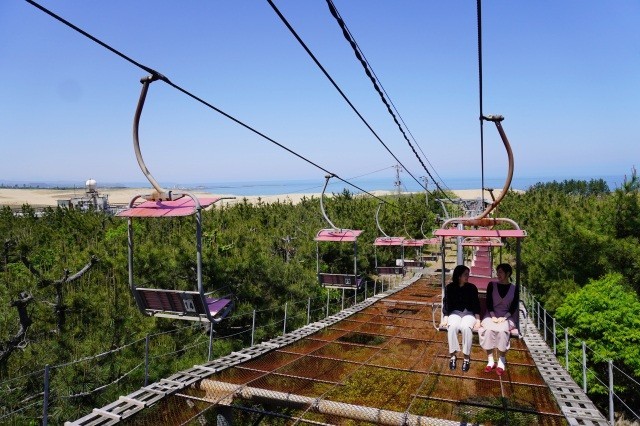
This facility is also the departure and arrival point for the sightseeing lift. We recommend using the lift to reach the sand dunes in just 5 minutes each way.
The gift shop offers an extensive selection of Tottori's famous local products, so be sure to enjoy shopping after your sand dune tour.
View basic information
- Address (Japanese)
- 鳥取市福部町湯山2083
- Telephone Number
- 0857-22-2111
- Opening Times
- 9:00 a.m. - 5:00 p.m.
- Closed
- Open every day
Tottori Sand Dunes Sightseeing Lift
Enjoy a refreshing ride on the fast and convenient sightseeing lift!
This sightseeing lift offers an aerial view of the entire sand dune. During the ride, which takes about 5 minutes each way, you can enjoy the vast sand dunes and the beautiful view of the Sea of Japan spreading out beyond them through the gaps between the trees.
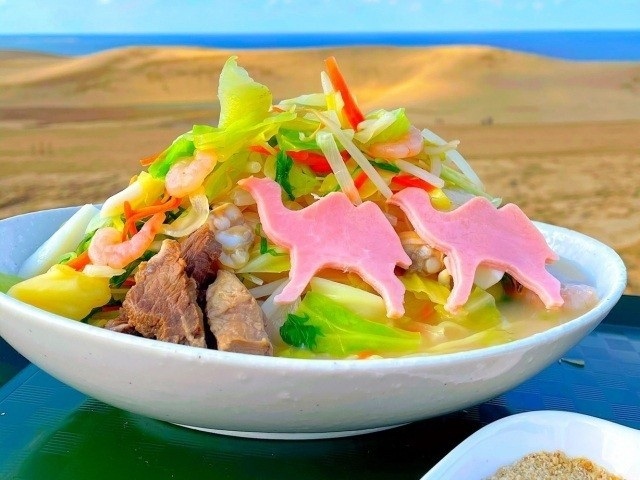
The boarding area is located at Sakyu Center "Miharashi no Oka" There is also a restaurant there, where the “Sand Dune Seafood Bowl” and local burgers are so popular they have even become a hit on social media. The restaurant's rooftop terrace offers sweeping views of the Sea of Japan and the sand dunes.
Enjoy a quick spot of shopping at the gift corner, which features a variety of local specialties from Tottori Prefecture.
View basic information
- Address (Japanese)
- 鳥取市福部町湯山2083
- Telephone Number
- 0857-22-2111
- Opening Times
- 9:30 a.m. - 4:00 p.m.
- Closed
- Open every day
(*Lift operation may be suspended due to weather conditions)
Tottori Sand Dunes
The beautiful, majestic sand dunes are Tottori’s main tourist attraction
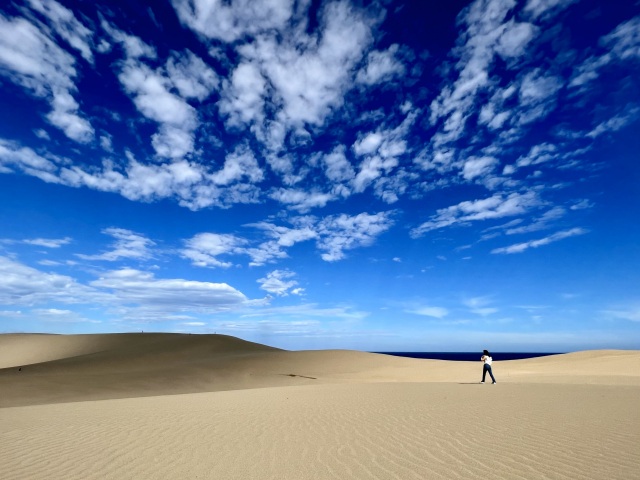
The beautiful sand dunes, spread across the Sea of Japan, is one of Japan's largest expanse of coastal sand dunes. A part of it has been designated a national natural monument. In particular, “Umanose" (“Horse’s Back”), a wall of sand that stands at a height of 47 m, is an impressive and poweful sight when viewed from directly below.
The wave-like patterns created by the sea breezes are incredibly beautiful, and exude the strong presence of nature’s ever-changing beauty.
◆ Be careful to avoid heatstroke.
At Tottori Sand Dunes, even in seasons other than summer, there is a risk of heatstroke when the maximum temperature exceeds 20 degrees Celsius. There is no shade within the sand dunes, so please bring a hat, umbrella, or other sun protection, as well as plenty of fluids, and take proper precautions against heatstroke before heading out.
◆ Replenish your water and salt intake frequently.
(Drinking alcohol the day before may cause dehydration, so be sure to take plenty of fluids on the day of your visit).
◆ We recommend wearing cool clothing and using a hat or parasol.
◆Take breaks at moderate intervals and avoid strenuous schedules.
◆ If you feel unwell, rest immediately in a cool place.
Sand becomes extremely hot when the sun is strong, so walking barefoot or in sandals could result in burns. Be sure to wear socks and shoes when walking on the sand.
◆ Information on camel riding experiences
Starting in 2024, only commemorative photo sessions will be offered on weekends, national holidays, spring holidays, summer holidays, autumn holidays, winter holidays, Golden Week (late April to early May), and Silver Week (mid-September).
(On most weekdays, operations are also focused mainly on photo sessions.)
Please note that operations may be suspended on the day without prior notice due to weather or the camels’ condition.
Please check Rakudaya’s official website (Japanese) for details.
View basic information
- Address (Japanese)
- 鳥取市福部町湯山
- Telephone Number
- 0857-22-0021
Tottori Station
Ride the JR Inbi Line to the Wakasa Railway
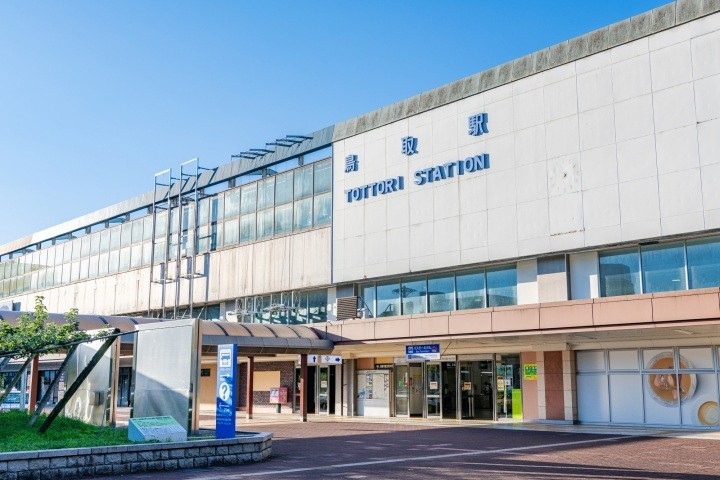
Transfer to the Wakasa Railway at Koge Station, about 15 minutes from Tottori Station on the JR Inbi Line.
Some trains run directly without a transfer, but the number of services is limited, so be sure to check the round‑trip timetable in advance.
Wakasa Railway Ticket Information
In addition to the standard hard‑ticket fare, several value tickets are available:
■ Wakasa Railway Day Trip Ticket (advance purchase required)
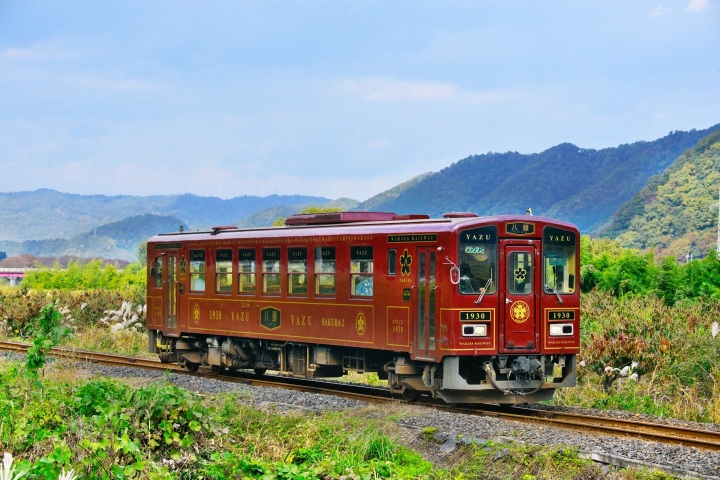
Wakasa Railway
A Charming Trip on a Nostalgic Local Train
Transfer to the Wakasa Railway at Koge Station. Enjoy the nostalgic scenery of rural Japan as you ride toward the final stop, Wakasa Station.
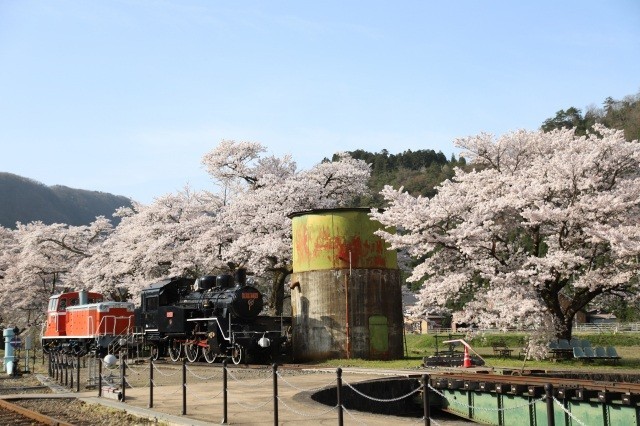
Wakasa Station
A retro wooden station building and a collection of trains that train enthusiasts will find irresistible
Wakasa Station is the terminus station on Wakasa Railway's Wakasa Line, which runs through picturesque mountain villages. The charming wooden station building, constructed about 100 years ago, has retained its historic exterior while its interior has been completely renovated by industrial designer Eiji Mitooka. The result is a space that blends retro charm with a sophisticated appeal.
Steam locomotives that once supported Japan's railway system have been preserved in working condition. Additionally, a manually operated turntable for changing the direction of locomotives is still in use, a rare sight not be missed. A total of 23 facilities under Wakasa Railway, including Wakasa Station, have been designated as National Registered Tangible Cultural Properties, so visitors can get a first-hand sense of Japan’s railway history and culture.
Wakasa Railway uses traditional paper tickets, which are popular among railway enthusiasts. At Wakasa Cafe retro located inside the station, you can enjoy coffee and light snacks while admiring steam locomotives and stylishly designed sightseeing trains.
View basic information
- Address (Japanese)
- 八頭郡若桜町若桜
- Telephone Number
- 0858-82-0919
- Closed
- Open every day
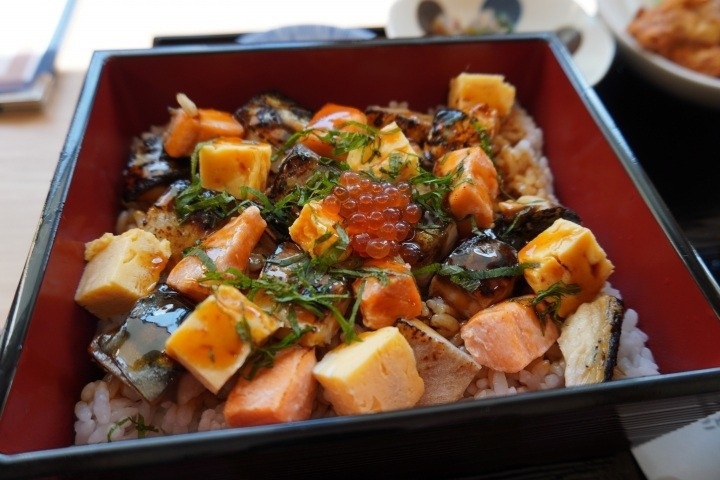
【Lunch】Gohan to Omiyage Yamaneya
Try the locally loved grilled mackerel sushi.
Yamaneya is located along the main street of Wakasa‑juku, right in front of Wakasa Station, and offers local specialties, handicrafts, and original goods. Its most famous item is the Grilled Mackerel Sushi, a popular product that can also be found in supermarkets across Tottori Prefecture. The shop includes a small eatery where you can enjoy dishes made with local ingredients, as well as a bento‑style version of the grilled mackerel sushi called Grilled Mackerel Boxed Sushi.
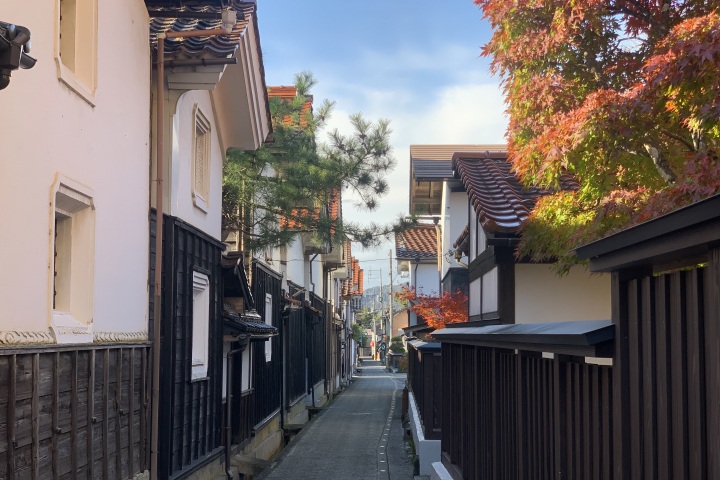
Strolling Through Wakasa‑juku
A charming historic town that prospered as an important post‑station in the past.
Wakasa‑juku was once the castle town of Wakasa Oniga‑jo. It flourished as a post‑station on the Wakasa Highway connecting Tottori and Himeji, and also prospered as a commercial town along the historic Ise Road.
The townscape still retains its nostalgic atmosphere. You can stroll through Kura‑dōri, an area lined with traditional storehouses, and Kari‑ya‑dōri, a street characterized by rows of buildings with distinctive sunshades above their windows and doors. A small stream runs alongside the street, creating a charming setting where you can enjoy historic architecture and the retro ambiance of this old post‑station town.
View basic information
- Address (Japanese)
- 八頭郡若桜町若桜
- Telephone Number
- 0858-82-2237
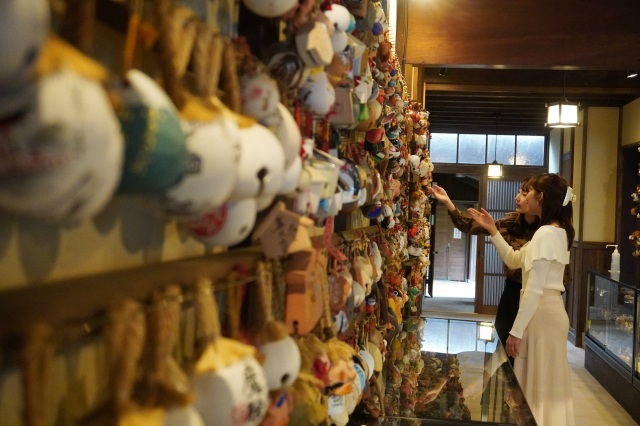
Wakasa Folk Craft Museum
Discover nearly 2,000 clay bells in a beautifully preserved folk house.
A traditional Japanese house built about 100 years ago (the former Nakao Residence) has been renovated to showcase folk crafts created by people connected to Wakasa Town.
Just inside the entrance, the sight of nearly 2,000 clay bells hanging densely along the left wall is truly impressive.
From classic designs to charmingly unique ones, each bell has its own expression and a warm, handmade feel.
Be sure to also enjoy the architecture of this Taishō‑era residence and its beautiful garden.
View basic information
- Address (Japanese)
- 八頭郡若桜町若桜268
- Telephone Number
- 0858-82-1289
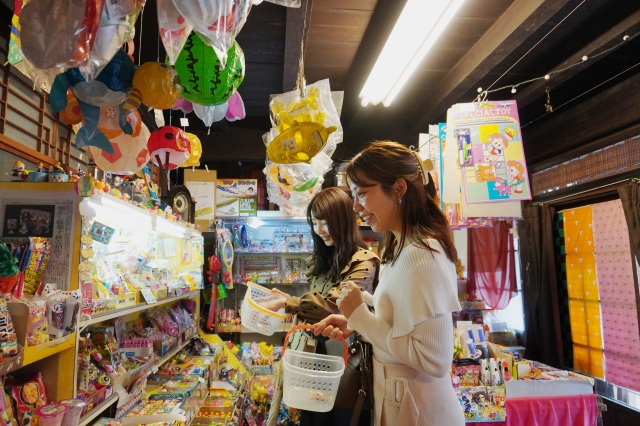
Showa Toy Museum(Sweets shop)
A nostalgic dagashiya filled with retro sweets and toys.
A retro-style dagashiya housed in a Meiji‑era traditional home along Wakasa‑juku’s main street. The long eaves and kariya—a hallmark of Wakasa’s architecture—guide you to its welcoming sign. Inside, shelves of colorful dagashi and timeless toys revive the thrill of childhood, delighting visitors of all ages.
View basic information
- Address (Japanese)
- Yazu gunWakasa Town Wakasa 430
- Telephone Number
- 0858-71-0003
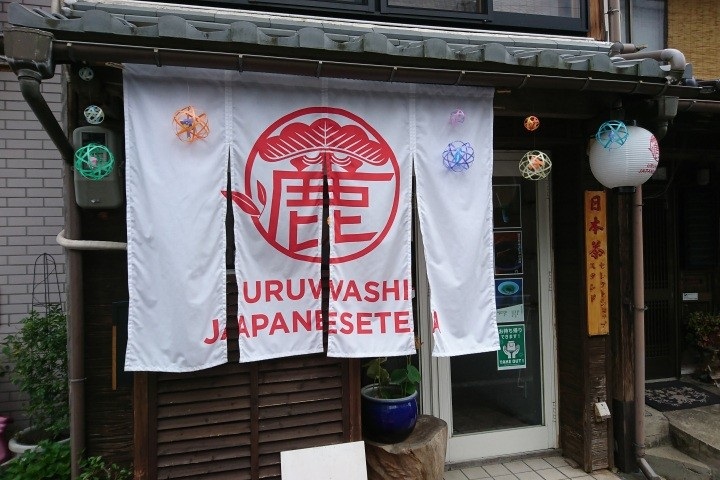
URUWASHI JAPANESE TEA(CAFE)
Discover a new charm of Japanese tea.
This Japanese tea stand offers an elegant selection of fragrant teas. You can relax inside and enjoy tea freshly brewed right in front of you by the owner, or take a hojicha or matcha latte to go and enjoy a stroll around town.
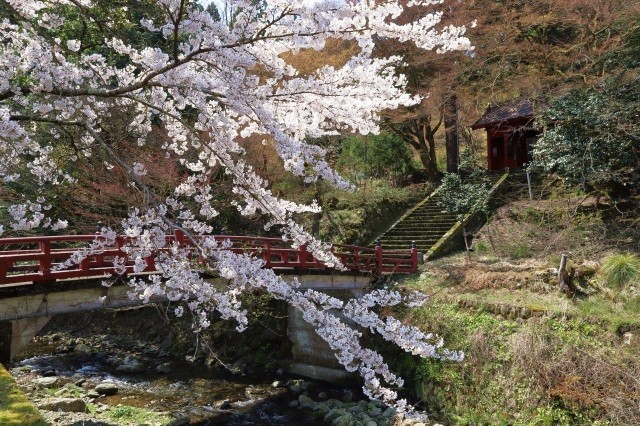
WAKASA SHRINE
A Sacred Guardian Standing in the Forest
Wakasa Shrine, the guardian deity of Wakasa, stands in a sacred forest and is approached by an impressive 200‑step stone staircase. Once known as Matsuue Daimyōjin, it was relocated during the era of the Yabe clan and Oniga‑jō Castle. The shrine was long revered by the lords of Wakasa Castle, and its treasure records include offerings from Emperor Go‑Daigo and notable warriors.
View basic information
- Address (Japanese)
- 八頭郡若桜町若桜634(社務所)
- Telephone Number
- 0858-82-1068
Hakuto Beach, Hakuto-no-oka
A spiritual spot for finding love
Hakuto Beach is a beautiful stretch of white sand shaped like a bow. In summer, it is crowded with many beachgoers and surfers. This coast is the setting for the Japanese myth about the white rabbit of Inaba, a story that has been passed down since ancient times. Hakuto Shrine is dedicated to the white rabbit, revered as a symbol of love and marriage. Hence, it attracts many lovers and has been designated as a “Lover's Sanctuary.”
On the western side of Hakuto Beach is a viewing plaza called Hakuto-no-oka. A “love bell” and camera stand have been set up here, so visitors can take beautiful photos with the Sea of Japan as their backdrop.
On the eastern side is a cluster of beach roses, designated as a national natural monument. From mid-May to mid-June every year, pale red flowers bloom here and welcome visitors.
View basic information
- Address (Japanese)
- 鳥取市白兎
- Telephone Number
- 0857-22-3318
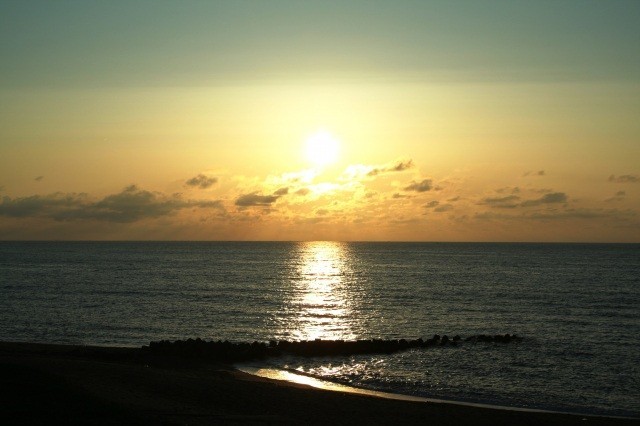
Hakuto Shrine
Take in the view of beautiful waters spreading before you at this shrine, renowned for bestowing luck for matchmaking
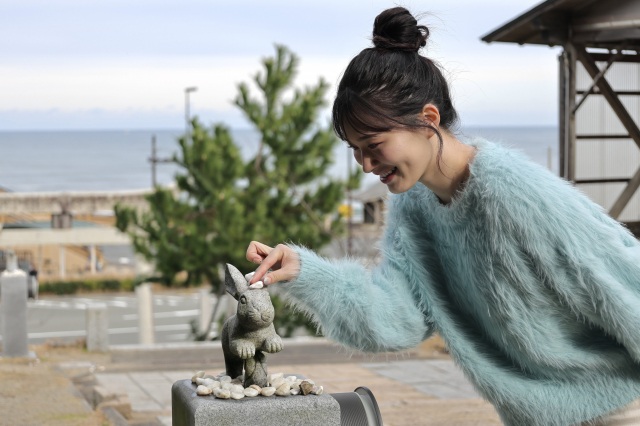
This shrine is associated with a Japanese myth about the white rabbit of Inaba, in which a kind-hearted deity saves a wounded rabbit and, as a result, becomes a deity of love matches and marriage. The shrine is recognized as the birthplace of Japan's first love story and has been designated as a “Lover’s Sanctuary."
The grounds are lined with adorable statues of white rabbits, and you can buy ema (wooden plaques on which people write their wishes) and omamori (amulets) decorated with a rabbit motif. Among these, Hakuto Shrine is famous for its musubi ishi, an amulet that includes five stones. It is said that writing your wish on the stones and placing them at the torii gate or a white rabbit statue, will make the wish come true.
Not far from the shrine is a roadside station where you can enjoy seafood dishes while gazing out across the Sea of Japan, as well as Hakuto Beach and Hakuto-no-oka, renowned for beautiful sunsets and breathtaking views.
View basic information
- Address (Japanese)
- 鳥取市白兎603
- Telephone Number
- 0857-59-0047
- Opening Times
- Shrine Office 9:00 a.m. - 4:00 p.m.
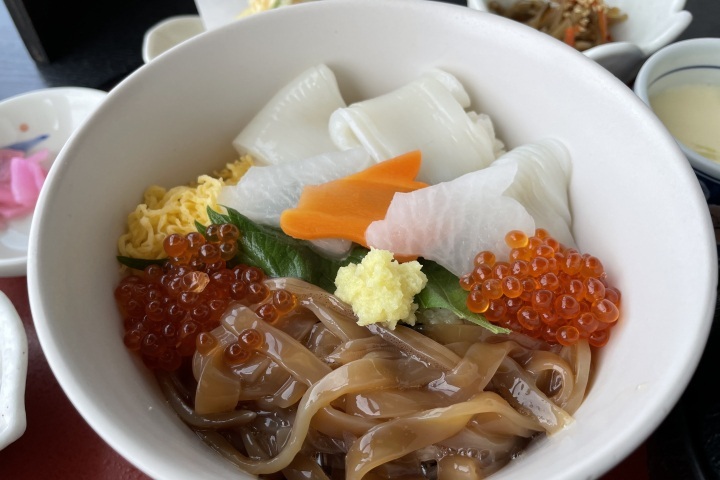
【Lunch】Osakana Dining Ginrin-tei
Enjoy the fresh flavors of the Sea of Japan.
A restaurant located on the second floor of Roadside Station Shinwa no Sato Hakuto, where you can enjoy an elegant meal in a traditional tatami room while gazing out over the Sea of Japan.
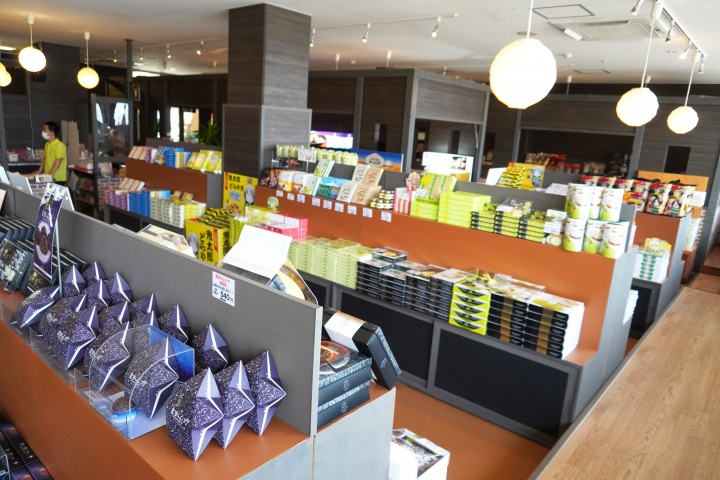
Roadside Station Shinwa-no-sato Shirousagi
A roadside station boasting beautiful views of the Sea of Japan
This is a roadside station located right in front of Hakuto Beach. This coast is the setting for the Japanese myth about the white rabbit of Inaba and is famous as a place for love matches due to its link with the story.
In addition to purchasing various local specialties from Tottori, you can enjoy fresh seafood cuisine at the second-floor restaurant that overlooks the sea. The menu features local gourmet dishes and unique items inspired by the myth. There is also a wide selection of sweets and merchandise with the white rabit as the motif.
View basic information
- Address (Japanese)
- 鳥取市白兎613
- Telephone Number
- 0857-59-6700
- Opening Times
- 8:00 a.m. - 7:00 p.m.
(December 3 - February 28 8:30 a.m. - 6:00 p.m.) - Closed
- Open every day
Tottori Castle Ruins/Kyusho Park
Enjoy a panoramic view over the whole of Tottori! A castle ruin and park famous for its cherry blossoms
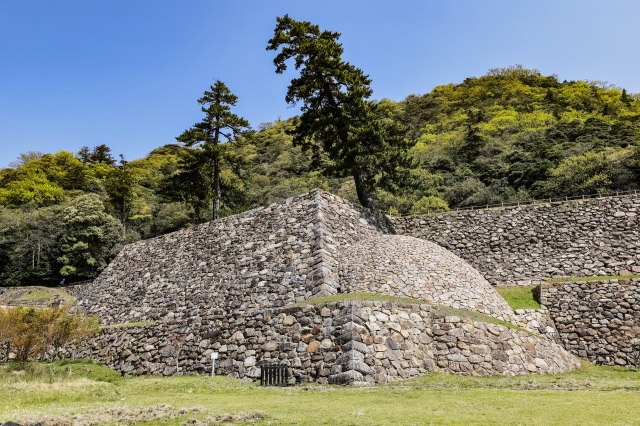
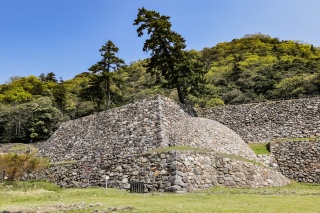
◆Tottori Castle Ruins
The historic Tottori Castle, built in the 16th century, is best known for falling at the hands of the famous military commander Toyotomi Hideyoshi, who employed starvation tactics (a strategy of laying siege to a castle, cutting off its supply of food and resources, to force the enemy to surrender).
Today, the stone walls and the foundation of the keep (known as “Tenshudai”) remain. In recent years, restoration plans to bring the castle back to its former glory have been underway, and the bridge that serves as the main entrance as well as the Otemon Gate already restored. Plans to restore other buildings are also in the works, making this a must-see spot for those interested in history and castles.
◆Kyusho Park
Kyusho Park was constructed by developing the Tottori Castle Ruins, and it features a spacious lawn. It is a renowned spot for cherry blossoms in the spring, and offers beautiful views marked by the colors of autumn leaves in the fall.
Other attractions near the park include Jinpukaku, a Western-style mansion associated with the imperial family from the Taisho period (1912-1916), and the Tottori Prefectural Museum.
[Notice of extended closure of Jinpukaku]
Jinpukaku will be closed for an extended period until around 2029 for conservation and repair works on the cultural property. During this period, the Horyuin Tei'en garden and Hosen-an, located within the grounds, will remain open to the public.
View basic information
- Address (Japanese)
- 鳥取市東町2
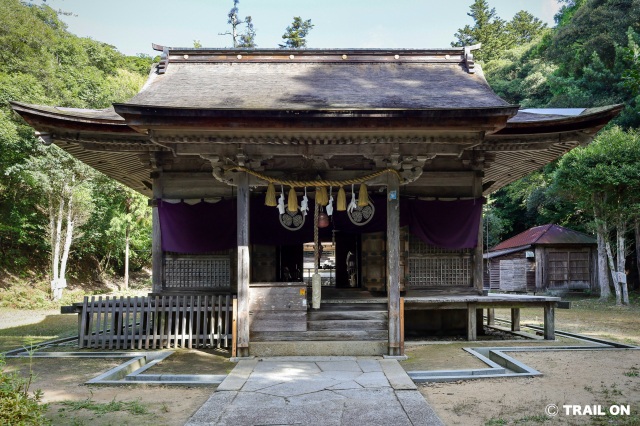
Tottori Toshogu Shrine (formerly Ochidani Shrine)
A National Important Cultural Property established in the 17th century
The falcon carvings that decorate the pillars of the main hall are said to be the work of the legendary Edo-period sculptor, Hidari Jingoro, who is also reputed to be the artisan who created the Nemuri-neko (sleeping cat) carving at Nikko Toshogu Shrine. This demonstrates the high level of decorative artistry of the time.
View basic information
- Address (Japanese)
- 鳥取市上町87
https://kururi-bus.jp/
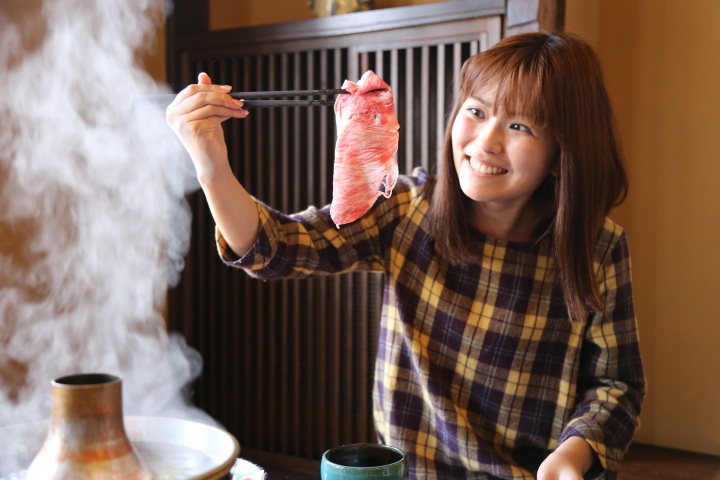
【Dinner】Takumi Kappo Restaurant
Enjoy local cuisine in a space inspired by Tottori Mingei (folk craft).
Enjoy local flavors served in handcrafted mingei vessels. Don’t miss their most famous dish, the Beef Susugi Hotpot, known as the predecessor of shabu-shabu.
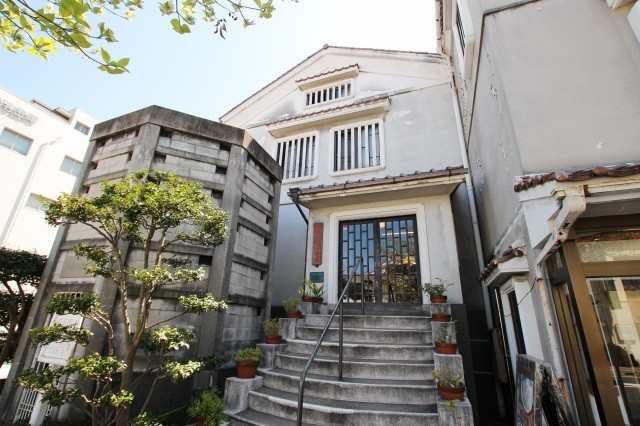
Tottori Folk Crafts Museum
A museum where you can experience the charm of Tottori’s folk art
This museum houses approximately 5,000 pieces, including art pieces from around the world and folk craft works from Tottori, collected by Shoya Yoshida, known as the “father of Tottori's folk craft.” While working as a doctor, Yoshida dedicated himself to nurturing artisans in various fields of craft, including pottery, woodworking, metalwork, bamboo craft, dyeing, and Japanese paper making. This museum was established not only to spread the beauty of folk craft to the masses, but also as an educational venue to set standards of beauty for artisans. Highlights include the museum's exterior, resembling a traditional storehouse, and the sliding doors and other interior decorations crafted with meticulous detail.
Folk Crafts Shop TAKUMI, Japan's first folk craft specialty store, is located next door. Here, you can purchase Ushinotoyaki pottery and pottery produced by Nakai Kiln, as well as dyed textiles. There is also an adjoining restaurant, Takumi Kappo Ten, where you can enjoy local cuisine served on folk craft tableware.
View basic information
- Address (Japanese)
- 鳥取市栄町651
- Telephone Number
- 0857-21-3504
- Opening Times
- 10:00 a.m. - 5:00 p.m.
- Closed
- Wednesday (or the following day if it is a national holiday), year-end and New Year holidays

![[Departure from Kansai: 2 nights, 3 days] Enjoy the San'in…](/lsc/upfile/course/0000/0049/49_1_s.jpg)
![[3 hours] A classic sightseeing itinerary for enjoying the…](/lsc/upfile/course/0000/0068/68_1_s.jpg)
![[90 minutes] A classic sightseeing itinerary for enjoying …](/lsc/upfile/course/0000/0067/67_1_s.jpg)
![[8.5 hours] Take a scenic ride on Wakasa Railway and explo…](/lsc/upfile/course/0000/0034/34_1_s.jpg)